
'Maharashtra is virtually in a debt trap.'

Do you have financial planning or income tax queries? Ask rediffGURU Anil Rego.

It was a protest which held a mirror to the government of a state taking pride in its commitment to democracy, gender equality and social indices.One person, who in his employed days had known governments and political parties at close quarters, told me that public perception of how the Kerala government handled the ASHA workers' strike had been terrible, reports Shyam G Menon.

Business cycle funds aim to optimise returns by aligning their portfolios with different phases of the economic cycle. First-time investors, those who prefer stable sector allocations, and those averse to volatility should steer clear of them.

The Reserve Bank on Wednesday approved a Rs 2.11 lakh crore dividend payout to the central government for 2023-24, more than double the amount it paid for the previous 2022-23 financial year. The decision was taken at the 608th meeting of the Central Board of Directors of the Reserve Bank of India held under the chairmanship of Governor Shaktikanta Das.

India's fiscal deficit trends are a bit like an alcoholic trying, unsuccessfully, to reform. Virtue does not last for too long, says Shankar Acharya.

The state's economic health is in focus as it has consistently breached the fiscal deficit in eight of the last 10 years since Telangana's formation.

The government had pegged the fiscal deficit for 2020-21 at Rs 7.96 lakh crore or 3.5 per cent of the GDP in the budget presented by Finance Minister Nirmala Sitharaman in February.

India's current account deficit declined sharply to 1 per cent of the GDP or $8.3 billion in the second quarter of this financial year, mainly due to lower merchandise trade deficit and growth in services exports, according to a RBI data released on Tuesday. The current account deficit (CAD), which represents the difference between the total amount of money sent abroad and money received from overseas across the economy, was 3.8 per cent of GDP or $30.9 billion in the July-September quarter in 2022-23. CAD was $9.2 billion or 1.1 per cent of GDP in the first quarter (April-June) of the current financial year 2023-24.

The Indian economy is recovering from the slowdown in momentum witnessed in the September quarter, driven by strong festival activity and a sustained upswing in rural demand, according to a Reserve Bank of India (RBI) bulletin released on Tuesday. An article on the 'State of the Economy' in the December bulletin noted that the global economy continues to exhibit resilience with steady growth and moderating inflation.

The Indian rupee is likely to depreciate further against the US dollar through the end of 2024. This is due to the continued strengthening of the greenback, combined with the weakening of the Chinese yuan, which is expected to keep pressure on the Indian currency.
India's current account swung to a deficit for the first time in the current fiscal, with the gap coming at $1.7 billion or 0.2 per cent of the GDP in the December quarter. In the current fiscal, as the pandemic impacted trade, the current account had been in surplus in the previous two quarters, at $15.1 billion and $19 billion, respectively, as per the data on balance of payments released by the RBI on Wednesday. The critical measure of a country's external strength now stands at a surplus of 1.7 per cent of GDP for the first nine months of the fiscal year as against a deficit of 1.2 per cent in the year-ago period. In the December quarter, there was a rise in the merchandise trade deficit to $34.5 billion from $14.8 billion in the preceding quarter, and an increase in net investment income payments.

Expressing serious concern about the country's financial health, Prime Minister Manmohan Singh on Thursday warned that economic progress could be hindered if the mounting fiscal deficit of 9 to 10 per cent of the national income was not contained.

There is a case for analysing the fiscal deficit, separately for expenditure and investment.

The government further said the gross tax revenue as a per cent of GDP is expected to increase to 12.1 per cent of GDP in 2019-20 and stabilise at that level in 2020-21 before climbing up to a level of 12.2 per cent of GDP.
Post office savings deposit, recurring deposit accounts and the senior citizen savings scheme account have shown the highest growth in the current financial year.
Delhi faces a severe financial crunch and the deficit is largely due to numerous welfare schemes without adequate revenue flowing in. The success of welfare schemes and electoral promises will need careful financial planning and out of the box thinking to whip up additional revenue, notes Ramesh Menon.

Thrust on infrastructure and capital expenditure is expected to continue in the Union Budget for FY25.

The monthly Rs 2500 payment for poor women is expected to cost Rs 11,000 crore while the pension scheme of Rs 2000 for every senior citizen will cost around Rs 4100 crore. The Yamuna clean up will cost over Rs 10,000 crore while a similar amount is required to upgrade Delhi's hospitals. Ultimately, the new BJP government will have no choice but to ask the centre for financial support, notes Rashme Sehgal.

Stating that India's consolidated deficit is the highest among the G20 nations, Gopinath added it is important for India to undertake reforms.

The government Rs 20 lakh crore package includes Rs 1.7 lakh crore of fiscal stimulus announced in the first phase, Rs 5.6 lakh crore stimulus provided through various monetary policy measures and Rs 5.94 lakh crore through the second phase, implying Rs 6.70 lakh crore package is still to be announced.

Uttar Pradesh presented a deficit budget for the financial year 2011-12.
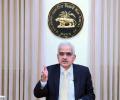
The challenge for the RBI in 2024 is likely to be less about containing elevated inflation and more about curbing excessive financial market exuberance and a 'problem of plenty', notes Sajjid Chinoy, Chief India Economist JP Morgan.
Crosses Budget Estimate by 5.5%, govt expected it to be 4.6% of GDP for current financial year

However, copious oil supplies amid growing global output and slowing Chinese oil consumption will put India in a better bargaining position with Gulf suppliers.

'Why has Maharashtra slipped up over the past couple of decades?' 'Not only is this question critical for residents of the state, but given that it accounts for 14% of India's GDP, a faster-growing Maharashtra implies a faster-growing India as well, point out Shishir Gupta and Rishita Sachdeva.

The alarming level of life insurance policy misselling has caught the attention of policymakers amid efforts by the insurance regulator to boost insurance penetration, a top official from the Insurance Regulatory and Development Authority of India (Irdai) said on Tuesday. According to Satyajit Tripathy, member-distribution at Irdai, while life insurance grievances often relate to product issues, non-life insurance complaints typically concern claim payments and exclusions. Addressing these grievances is essential to increasing insurance penetration, he said.

Deficits could come under more pressure in coming years as states implement their own Pay Commissions.

India and the United States will finalize the contours, schedule of negotiations, and terms of reference for a proposed bilateral trade agreement (BTA) during a three-day meeting beginning Tuesday. The agreement is expected to be finalized in two tranches, with the first phase focusing on goods trade. The US team, led by Assistant US Trade Representative for South and Central Asia Brendan Lynch, will be in India from March 25-29 to discuss the agreement. Both countries are aiming to conclude the first phase of the agreement by fall 2025.

'Consider 40% to 50% in equities, 10% in gold as a hedge, and the remaining 30% to 40% split between multi-asset funds and hybrid funds.'

Highlights of the Union Budget 2024-25 presented by Finance Minister Nirmala Sitharaman in Lok Sabha on Tuesday.

India's gold imports, which have a bearing on the country's current account deficit (CAD), increased 26.7 per cent to $35.95 billion during the April-December of this fiscal due to healthy demand, according to government data. The imports stood at $28.4 billion during the same period a year ago. In December 2023, imports of the precious metal jumped by 156.5 per cent to $3 billion, as per the data released by the commerce ministry.

The trade deficit with China continues to soar at a blistering pace even as India is looking at aggressively increasing and strategising the reach of its products into the Chinese markets.
The government should have mentioned clearly the specific structural reforms that were responsible for the deviation from the fiscal deficit target by half a percentage point, says A K Bhattacharya.
Unperturbed by the rise in the fiscal deficit, Finance Minister P Chidambaram on Thursday exuded confidence that it would remain within the target of 4.8 per cent of GDP in the current financial year.

The Tata Group is one of the very few Indian MNCs which has carved out a niche in China's highly competitive market, notes Rup Narayan Das.

If the fiscal deficit target of 4.9% of GDP has to be met for 2024-2025, which the government must in view of the uncertainties and challenges emerging both domestically and globally, the finance ministry may see in the composition of the current year's capex a sliver of hope, notes A K Bhattacharya.
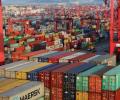
India's exports grew by 67.39 per cent to $32.21 billion in May driven by healthy growth in sectors such as engineering, pharmaceuticals, petroleum products and chemicals, according government data released on Wednesday. Exports in May last year stood at $19.24 billion and in May 2019 it was at $29.85 billion, the commerce ministry's preliminary data showed. Imports in May rose by 68.54 per cent to $38.53 billion, from $22.86 billion in May 2020. In May 2019, imports stood at $46.68 billion.

Inflation, which has been at high levels, is also a key challenge for the country, Thomas J Richardson, the IMF's Senior Resident Representative in India and Nepal, said in New Delhi on Wednesday.
India recorded the highest monthly exports during the fiscal in February, registering an 11.9 per cent growth to $41.4 billion, mainly driven by increased shipments of engineering goods, electronic items and pharma products. The trade deficit during February worked out to $18.7 billion, up from $16.57 billion in the year-ago month, as gold imports surged significantly. Merchandise imports were valued at $60.11 billion, up 12.16 per cent compared to $53.58 per cent in February 2023.
